
What Fasting for 5 Days Taught Me About True Hunger vs. Emotional Craving

Table of Contents
- Old Habits Die Hard
- 1. The Danger of 'Habit Creep' and the Dark Chocolate Trap
- 2. The Real Motivation Behind My 5-Day Fast
- 3. The Reality of the Timeline: Hour 12 vs Hour 119
- 4. Unmasking the Mental Stronghold of Food
- Food the Dictator
- The Takeaway: Reclaiming Control Over the Mind
Old Habits Die Hard
Certain old habits were starting to creep back in a little. It was nothing particularly worrisome, but my baseline discipline had slightly fallen by the wayside. Whilst I wasn't overly concerned just yet, I was acutely aware that 'the creep' is real. A bad habit always starts off incredibly small, and then, before you know it, that destructive routine has crept right back into the centre of your life.
For me, it started when I re-introduced dark chocolate—specifically 90% cocoa—and even started making my own. Cocoa supposedly has incredible health benefits (not that this was my actual motivation), I was hovering around 190 lbs and found myself thinking about adding a little bit of luxury back into my life. Not a lot, just a tiny treat.
Initially, I was able to maintain strict discipline. I stuck to having one single, 10g square per day with my lunch. But it wasn't long before one square with lunch became one square with lunch and one square with dinner. Then it became two squares with each meal. Before I knew it, I was actively altering my main meals just to accommodate more of the dark chocolate.
A whole bar of 90% dark chocolate only contains 14g of carbohydrates (of which 7g is sugar), so assuming I didn't go overboard elsewhere, it was 'technically' allowable within my strict 20g daily limit.
1. The Danger of 'Habit Creep' and the Dark Chocolate Trap
However, as a food addict—or more accurately, a carb and sugar addict—moderation simply isn't possible for me.
I only truly discovered that my addiction was explicitly tied to sugar since Christmas 2025, and I will definitely speak more about that breakthrough in a dedicated post of its own. But the reality is that for a personality like mine, I have to stay completely away from sweet-tasting food entirely including natural sweeteners. Rather than trying to re-introduce 'luxury' into my diet, what I actually needed to do was re-introduce raw discipline.
To do this, I decided to undergo a prolonged fast. A while back, I had read about the immense health benefits of extended fasting—specifically how it can trigger cellular healing and kick-start a weight loss journey if you have hit a bit of a stubborn roadblock. I was generally happy with my current weight and size; however, I had always secretly wanted to see the scales hit around 185 lbs. As a result, I had ample motivation to see this challenge through.
2. The Real Motivation Behind My 5-Day Fast
I was certainly no stranger to fasting. By default, my daily low-carb routine already included a 17-hour fasting window out of every 24. I had also successfully completed full 24-hour fasts and even a couple of 3-day fasts in the past.
But if I am honest, I wasn't nearly as dialled into those previous fasts as I was during this 5-day stint. Back then, I wasn't actually listening to my internal thoughts; it was more about just gritting my teeth and getting through the time.
This time around, however, the sheer length of the fast forced me to listen to the constant chatter inside my head. To capture it, I decided to keep a raw, honest diary.
I had initially planned to complete a full 10-day fast. However, once I reached the 5-day mark, it began causing me some genuine issues. Physically, I was experiencing quite a few aches and pains, which in hindsight was probably down to a lack of proper electrolytes. But more poignantly, it was my mental and emotional connection to food that turned out to be the real eye-opener.
3. The Reality of the Timeline: Hour 12 vs Hour 119
When I had completed 3-day fasts in the past, the first day was always the most difficult obstacle. The second day was usually pretty straightforward, and the third day felt absolutely incredible—a combination of the natural 'high' associated with deep ketosis, the reality of the achievement, and the comforting knowledge that I would be able to eat relatively soon.
However, I was completely unprepared for the psychological revelations I would experience when I pushed past that threshold into days four and five. Chief among them was the realisation of just how much of the hunger we experience is entirely in our heads, rather than true physical hunger.
I had always assumed that as time went on during a period of not eating, you would naturally get hungrier and hungrier—assuming it was the body's desperate way of telling me it was time to eat. I fully expected that by day 5, I would be absolutely ravenous compared to hour one.
This simply wasn't the case. I was no hungrier at hour 119 than I was after 12 hours of not eating. Once that initial period of being full from my final pre-fast meal wore off, my physical hunger levels remained completely stable. It was the mental and emotional side of hunger that proved to be the most difficult obstacle to overcome. And if I am completely honest, I never truly conquered that mental pull.
4. Unmasking the Mental Stronghold of Food
Once I got through the first 24 hours, hours 25 to 48 and 49 to 72 were fairly straightforward. I was highly mindful of the fact that I hadn't eaten, but I wasn't tempted to break my streak. Once I crossed the 72-hour mark, however, the absence of food became an intense battle of the mind rather than a physiological need for nourishment.
The biological theory goes that whilst you have body fat—and let's face it, most of us have plenty of body fat reserves—your body will seamlessly pull its daily energy directly from those fat stores during a period of fasting. There is a massive window of time where putting physical food into our mouths is completely unnecessary because our metabolism will simply take exactly what it needs from what we store on our frames.
Therefore, the nagging hunger I was feeling was not my body warning me that I needed to eat right now or face starvation. It was a purely mental and emotional pull towards the deeply ingrained, habitual process of eating multiple times every single day.
I would honestly estimate that 95% of our daily hunger is entirely in the mind, with only a tiny 5% representing a genuine physical requirement. Is it any wonder that more people than ever before are overweight and struggling when we are all routinely consuming vastly more food than our bodies actually require to function?
If a formerly overindulgent food addict like me can go 5 full days without a single bite of food, it begs the question: how often do we really need to eat to maintain our health? I would suggest it is not a lot.
Food the Dictator
Food used to be the major dictator of my daily routine, and it took a 120-hour fast to make me realise just how much of a stronghold it held over my everyday life.
For example, on one of the days, I walked into my local town centre just to find something to do and take my mind off the fast. Mid-afternoon, I caught myself automatically thinking, "I must rush back home for lunch." Then it suddenly dawned on me: the only reason I wanted to get back for lunch was to eat. Seeing as I wouldn't be eating a single thing anyway, there was absolutely no rush.
I stopped. I breathed, and I relaxed. That subconscious desire to hurry home before lunchtime had always been there, completely running the show in the background. I had never been aware that I was habitually programmed to build my entire day around exactly when and what I was going to eat.
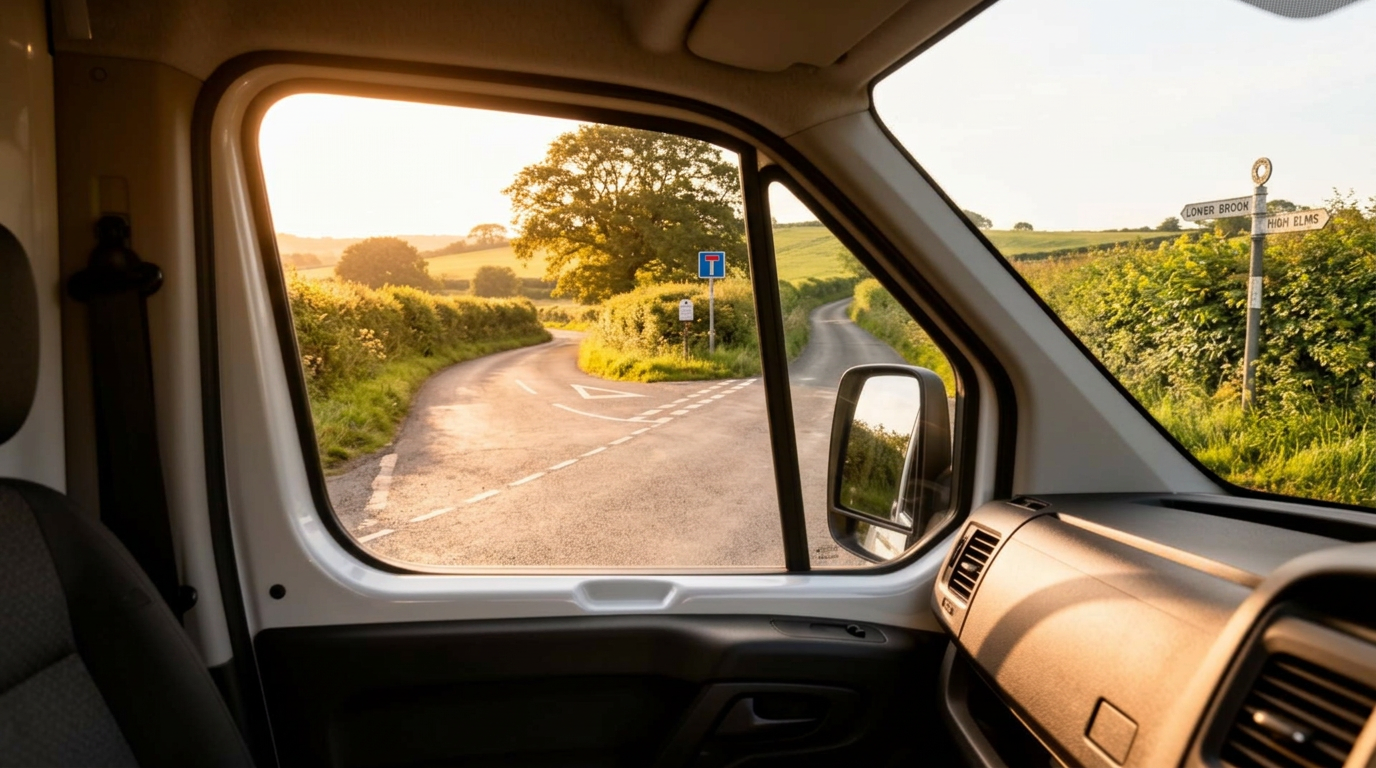
I experienced a very similar breakthrough at work while out on my delivery driving route. Normally, I would drive home for my lunch break, and I always felt an intense, anxious compulsion to rush through my deliveries to get them done as quickly as possible—despite there being absolutely no operational requirement for me to do so. In the total absence of food, the illusion shattered. I realised I was rushing purely so I could get home to eat.
With food completely taken off the table, there was no longer any reason to rush. I slowed down, took my time, and the entire workday instantly became less tiring and completely stress-free.
The Takeaway: Reclaiming Control Over the Mind
This prolonged fast was a truly profound period of my life. It completely restored my baseline discipline, which—let's be honest—needs a firm kick-start every once in a while.
But more than that, it was a massive eye-opener as to how much of what we call hunger is actually a social habit. It gives me immense mental strength to this day. It serves as a constant internal reminder during those moments where I feel desperate for food—healthy or otherwise—that it is simply my mind playing old tricks on me, driven by decades of habitual programming.
Get My Low-Carb Updates
No spam. Just raw, honest lessons from dropping 12 stone and reversing diabetes straight to your inbox.